From Imported Wildlife to Farms, Canada’s Cruelty Laws Run Thin to None
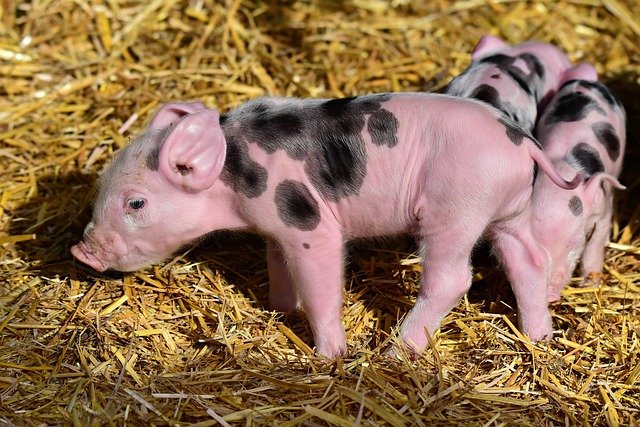
Image by 👀 Mabel Amber, who will one day from Pixabay
Article by Christopher Guly
June 8, 2021
What has Canada’s Parliament done lately for the welfare of animals?
In 2019, it passed a bill that banned animal fighting, defined bestiality in the Criminal Code as “any contact for a sexual purpose with an animal,” and prohibited the hacking off or importing of shark fins.
The same year another bill outlawed hunting whales and dolphins for captivity.
Now legislators are mulling Bill C-28, which seeks to better regulate laboratory animal testing, as The Tyee reported yesterday.
But animal labs are just part of a broader industrial terrain of trauma that Canada does too little to prevent, say people pushing for a range of new animal-welfare laws.The Tyee is supported by readers like you Join us and grow independent media in Canada
Camille Labchuk is a lawyer and executive director of the Toronto-based legal advocacy group Animal Justice. She told The Tyee that while strengthening criminal sanctions regarding animal cruelty in Canada would be welcome, “the vast majority of animal suffering happens on farms; it happens in research labs; it happens in the fur industry and it happens in the entertainment industry” that includes circuses, rodeos, zoos, aquariums and TV and movie sets.
“The Criminal Code is more helpful as a tool to prosecute people who kick dogs or strangle cats, which of course is bad,” said Labchuk. “But when you look at the amount of suffering involved in all those industries, compared to the amount of suffering animals endure in individual instances of abuse, the industries far outweigh the other type.”
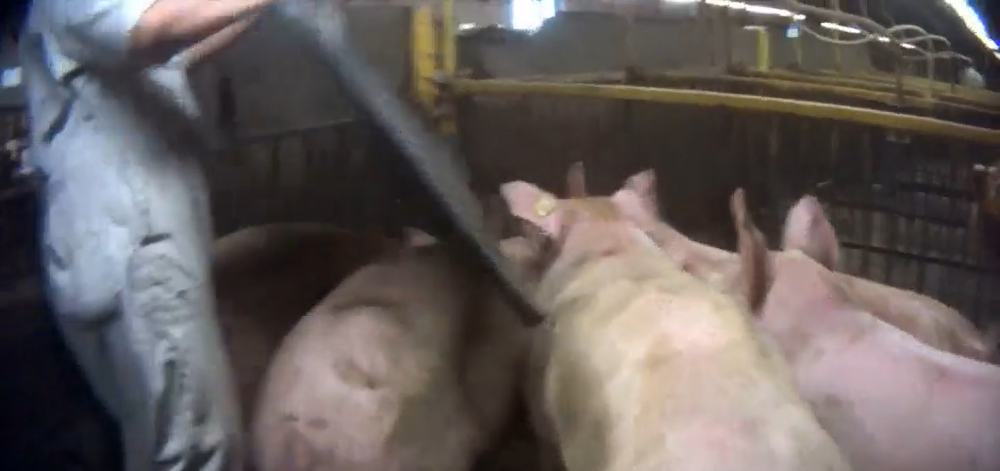
She noted the farming industry claimed 834 million animal lives in Canada in 2019. Last year, Animal Justice shared undercover footage from an Ontario pig farm with CTV’s W5 for a segment revealing images of abuse.
“We don’t have any federal or provincial legislation dealing with animal-welfare standards on farms. There’s nothing that says how much space animals need or the type of cages that can be used, or a rule that requires the use of anesthesia before you castrate them, cut off their tails or slice off the beaks on chickens,” said Labchuk.
Farm codes are voluntary and not enforceable
An oversight body exists called the National Farm Animal Care Council or NFACC, which bills itself as “the only organization in the world that brings together animal-welfare groups, enforcement, government and farmers under a collective decision-making model for advancing farm animal welfare.” Humane Canada (the Canadian Federation of Humane Societies) and World Animal Protection Canada are among the council’s partners.
The NFACC has codes of practice for the care and handling of farm animals, which are “very important in bringing all stakeholders together for a common national understanding of animal-care requirements and recommended practices,” Jean-Sébastien Comeau told The Tyee. Until recently, he was press secretary to federal Agriculture and Agri-Food Minister Marie-Claude Bibeau.
Those codes are developed through “a consensus-based process” facilitated by the NFACC, explained Jackie Wepruk, the Lacombe, Alberta-based general manager of the council, which receives funding from Agriculture and Agri-Food Canada to develop or update the codes of practice. “When any member, including animal-welfare groups, is not comfortable with a practice, we do not move forward — and that can make for interesting conversations with livestock and poultry groups.”
She said that most provinces have incorporated the NFACC’s codes by reference into their animal-protection regulations. How different farm sectors enforce their codes varies.
But Labchuk said the council is an “industry-led body dominated by commodity groups” and described its codes of practice as “voluntary” and “not enforceable on anyone and can’t be used to prosecute anyone.”
She explained that some of the sector, such as the dairy industry, conduct inspections. But the reports are never made public.
Labchuk would like to see the federal government establish regulations with the power of enforcement and an obligation to publicly disclose on a government website inspection reports for industrial farms across the country.
“It would give a way for the public to understand what’s happening behind the closed doors,” Labchuk explained. “Right now, the industry has control over all of that information.”
She said that as it stands, “animal protection can be characterized in this country as government abdicating responsibility and letting the private sector fill that void with their own processes, which they control, and the public does not.”
However, Wepruk doesn’t believe legislation is the best way to advance animal welfare on farms. “Most people don’t set out to not do right by their animals, so we need to focus on information sharing and tech-transfer to help people understand their responsibility to animals,” she said.
In an email, Comeau described animal welfare in Canada as “a shared responsibility between governments (federal, provincial and territorial) and industry (producers, transporters and staff in registered slaughter establishments).”
He said the provinces and territories “have the primary regulatory responsibility for protecting the welfare of animals, including farm animals, within their jurisdiction.”
Comeau said the Canadian Food Inspection Agency, or CFIA, has regulatory authority for both the handling of animals during transport as specified in the animal transport requirements of the Health of Animals Regulations as well as the humane treatment of food animals at federally licensed slaughter establishments in accordance with the Safe Food for Canadians Regulations.
“When these laws are broken, a monetary penalty may be imposed or other enforcement action taken, including recommending prosecution and the imposition of a fine, imprisonment or both,” he explained. “If CFIA inspectors encounter suspected cases of animal abuse or neglect that fall outside the CFIA’s jurisdiction, they forward information to the appropriate provincial/territorial authorities in Canada.”
‘Ag-gag’ laws and the powerful farm industry lobby
In 2019, the CFIA announced changes to humane-transport requirements under the Health of Animal Regulations.
But Liberal MP Nathaniel Erskine-Smith views those changes as “weak,” the result of pushback from agricultural producers and the meat industry over any resulting costs increase.
He is well acquainted with the farm-industry lobby, having attempted in Parliament to strengthen animal protection since being elected in 2015 in the Toronto riding of Beaches-East York. “Animals, think, feel and love, and need to be treated with respect,” Erskine-Smith told The Tyee.
In 2016, he introduced in the House of Commons Bill C-246, also called the Modernizing Animal Protections Act, but saw it soundly defeated.
There is also a private member’s bill, C-205, before Parliament, introduced by Alberta Conservative MP John Barlow, which would amend the federal Health of Animals Act to make it an offence to “enter, without lawful authority or excuse, a place in which animals are kept if doing so could result in the exposure of the animals to a disease or toxic substance that is capable of affecting or contaminating them.”
If passed, a conviction under Bill C-205 would allow for up to two years in prison and fines of up to $250,000 — or both — for individuals, or fines of up to $500,000 for organizations.
Labchuk said that a recent analysis by Animal Justice of Canadian Food Inspection Agency reports on disease outbreaks on farms dating back to 2003 revealed that “not a single case” was tied to a trespasser or activist present on the property.
“It’s almost always practices that farmers engage in, such as sharing needles between animals or allowing wild animals to be exposed to farm animals,” she explained.
In March, Animal Justice launched the first constitutional challenge to ag-gag laws in Canada by filing a claim against the Ontario government, claiming its Security from Trespass and Protecting Food Safety Act violates the right to freedom of expression.
As the animal rights organization summarizes, the Ontario law makes it illegal to go “undercover to reveal animal abuse, food safety risks and unsafe working conditions that are pervasive in animal agriculture.”
“In addition, Ontario’s ag-gag law targets peaceful protesters who stand on public property outside slaughterhouses to bear witness to the suffering of animals in transport and document the condition of animals in transport trucks.”
As Labchuk told The Tyee, “People are going undercover and exposing conditions because it’s one of the only ways to show the public the unsanitized truth.”
She added that it is not unlike retirement and long-term care homes using trespass orders against family members who raise concerns about a resident’s care.
In fact, Alberta’s Bill 27, enacted in 2019 as Canada’s first ag-gag law, extends beyond farms and makes it illegal for anyone to surreptitiously record any wrongdoing or poor conditions on an “occupier’s premises,” which would include nursing homes.
The animal-welfare issue on farms extends beyond Canada’s borders in such areas as the live export of horses for slaughter, targeted in a campaign involving Canadian singer-songwriter Jann Arden. The Vancouver Humane Society has also launched its own petition.
Curbing the global wildlife trade
The pandemic’s global catastrophe has powerfully underscored that some regulations to protect animals can safeguard people, too.
“Curbing the commercial wildlife trade should be top of mind,” said Erskine-Smith, “given that we are living through a pandemic that was likely caused, as with other infectious-disease outbreaks, by the relationship between humans, animals and the environment.”
Animal Justice supports a petition by World Animal Protection Canada calling on the federal government to “end the import and domestic trade in wild animals and wild animal products that could contribute to the spread of zoonotic disease in Canada.”
A virtual parliamentary reception was held in March featuring such guest speakers as Jann Arden, Buffy Sainte-Marie and Jane Goodall.
The campaign is “both to protect wild animals and us from pandemics,” explained Labchuk.
Last month, Michelle Rempel Garner, the official Opposition Conservative shadow minister for health, presented in the Commons an e-petition from World Animal Protection that received over 13,000 signatures calling on the federal government to end the global commercial wildlife trade.
“Currently, the majority of animals imported into Canada are not subject to any permits or pathogen screening,” said Rempel Garner, the MP for the federal riding of Calgary Nose Hill, in a statement. “That’s alarming considering recent reports confirming the likely role that wildlife trade played in transmitting COVID-19 from animals to people.”
Erskine-Smith sees opposition support for such a consequential ban as an example of possible non-partisan alignment on animal-welfare issues.
He believes that now is the time to “prevent the next pandemic” by addressing several issues, such as “our food system, the commercial wildlife system and continued action to deal with climate change and deforestation, and the effect on biodiversity and habitat. We need a one-health approach that recognizes that interconnectedness.”
The World Health Organization and global partners have made similar calls to action.
Last year, the United Nations Environment Programme and the International Livestock Research Institute released a report that identified seven trends driving the increasing emergence of zoonotic diseases, including increased demand for animal protein.
To help Canadians move toward non-animal diets, Erskine-Smith said the federal government should pay attention to Singapore’s move last year to approve for sale a cultured chicken product, a world first in terms of food made from animal cells given the green light for human consumption.
In late 2020, the world’s first restaurant serving lab-grown meat opened in Tel Aviv.
The year before, the Department of Agriculture and the Food and Drug Administration in the U.S. announced a formal agreement to regulate cell-cultured food products from the cells of livestock and poultry.
And, closer to home, the Canada Pension Plan Investment Board invested $50 million in Perfect Day, a California-based company that makes animal-free dairy products.
Supporting alternatives to meat
Erskine-Smith is encouraged that Canada’s latest food guide is “evidence-based, not lobby-based” in transitioning away from a meat-focus.
Released in January 2019, the guide emphasizes plant-based protein sources in Canadians’ diets, and the federal government and the agricultural industry have invested millions of dollars toward developing non-animal protein alternatives on farms, as Erskine-Smith pointed out.
“The biggest difference we can make for animals is by operationalizing our food guide in public institutions and supporting the alternative protein industry and making sure that we’re building out a real Canadian industry with not only plant-based food but also cellular agriculture,” he explained.
“This is where the world is heading, and where it has to head if we care about preventing climate change and future pandemics. This an area where Canada could take a lead.”
The farming industry has said as much.
In a March 2019 analysis, the National Research Council of Canada projects the global market for protein will double in 2054, and by then plant-based proteins will meet one-third of that demand.
Erskine-Smith likens the transition from animal to plant-based proteins in our diets to action being taken to the shift away from fossil fuels.
“Changing how we live and what we eat is important to reducing pandemic and climate risk, so we need to help alternative protein industries succeed in challenging industrial animal agriculture and support workers affected by any resulting change in our food systems,” he said.
Erskine-Smith would like to see a special all-party parliamentary committee established — an idea, he said, which has received support from the Canadian Federation of Agriculture — to modernize federal animal-protection legislation.
He acknowledged, however, that jurisdictional issues limit the extent of Parliament’s reach in enacting animal-welfare legislation.
With farms for instance, “enforcement of regulations is squarely within the purview of the provinces,” said Agriculture and Agri-Food Canada’s Jean-Sébastien Comeau. “At the federal level, we only offer guidance and recommendations.”
But in light of a federal election looming this fall, Erskine-Smith wants animal-welfare issues incorporated into the platforms of his and the other parties during the campaign.
“There’s a huge disconnect between how Canadians feel about this issue and how it’s dealt with by governments,” said Erskine-Smith.
Public-opinion surveys over the past five years reveal support for various forms of animal protection — and strong opposition to the seal hunt and trophy hunting, along with using animals in rodeos or killing them for their fur.
The Research Co. results also found that most respondents support “eating animals.” Yet as Labchuk, who is a vegan, noted, “People who eat animals still don’t want them to suffer.”
Last November, then-Manitoba senator Murray Sinclair introduced Bill S-218 which would largely prohibit the new captivity of whales, dolphins, porpoises, great apes and elephants in Canada, while banning trade in elephant ivory and the collection of elephant hunting trophies.
Still at the first reading stage, the bill is also named the Jane Goodall Act. This is its preamble:
“Whereas the phrase ‘all my relations’ expresses an Indigenous understanding that all life forms of creation are interconnected and interdependent,” and “whereas science, empathy and justice require us to respect the biological and ecological characteristics and needs of animals.”
Just one province has enshrined in law the recognition that animals are “sentient beings.” Quebec did so under its Animal Welfare and Safety Act in 2015.
Six years later, there is still too much animal cruelty in Canada, said Erskine-Smith. If an evolution is underway in how humans view all our relations, the laws of the land have yet to adequately reflect it. “We’re treating animals as a commercial activity,” he said, “rather than the sentient beings that they are.”
The first of this Tyee two-part series focused on efforts in Canada to change laws regulating animals used in laboratory research. Read that piece here.
From The Tyee, https://thetyee.ca/News/2021/06/08/Canada-Cruelty-Laws-Run-Thin-None-Imported-Wildlife-Farms/