21st Centtury Life Science requires a 21st Century Education. For future Canadian health professionals, researchers, biomedical engineers, no less than a state-of-the-art education is essential. To learn more, please visit: https://progressiveresearchsociety.com/
Alternative Resources – Post-Secondary: Interniche network focuses on animal use and alternatives within biological science, medical and veterinary medical education. www.interniche.org
Share this item with the buttons below :
Trauma Training on Animals Expands in Canada’s Military
Please show your support for the Animal Alliance of Canada Fund as they strive, along with the Animal Protection Party, to end the use of animals in horrific military training exercises. If 70% of NATO nations can train their military medics without resorting to animal use, why are our own Armed Forces not receiving similar, state-of-the-art preparation for 21st Century needs? The following comes directly from Animal Alliance and the APP, reprinted here with gratitude for their tireless campaign against such cruelty
Photo credit: Animal Protection Party of Canada
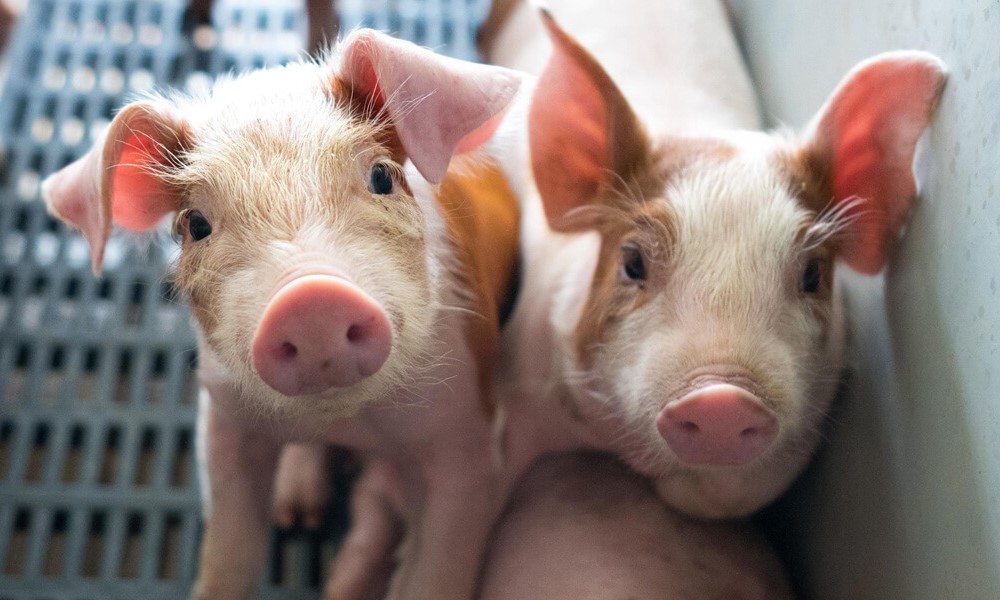
A new report released recently by the Animal Alliance of Canada Fund shows Canada’s Department of National Defence (DND) has expanded its use of live piglets in military trauma training, subjecting them to amputations, organ wounds, induced hypothermia, and exposure to chemical agents, even as Ottawa commits record sums to modernizing the Armed Forces.
The DND withheld 569 pages of records in response to Access to Information requests, including all photographs, all videos, and all anesthesia logs. The withholding of anesthesia records is particularly troubling given the DND’s documented history of piglets reviving during hours-long training sessions.
This follows the Animal Protection Party of Canada’s 2023 report Defenceless: Animal-Based Trauma Training in the Canadian Military, which drew on over 3,200 pages of Access to Information records to expose the DND’s use of piglets as young as 10 weeks in trauma training.
Image credit: JoAnne McArthur/ We Animals
The decision now to withhold every anesthesia log raises serious questions about transparency and accountability, particularly when those same records previously exposed extreme animal suffering the department had failed to prevent.The list of injuries inflicted by instructors and technicians has grown and now includes: Impalement with long metal or wooden instruments, including environmental debrisAmputation of both hind and forelimbs of all pigletsEye injuries created by inserting pieces of wood or metal under the eyelidsCrush injuries produced by placing a heavy object over a piglet’s hind legInduced hypothermia through exposure to cold temperatures and/or prevention of heat retentionEvisceration and chest opening, including puncturing of the lungsStabbing of the liver and spleenEvery one of these injuries was planned, approved, and carried out on a young piglet, despite the availability of human-relevant training methods.
Canada among a minority of NATO nations that continue to use animals
The continued use of animals in this context is also out of step with Canada’s allies. More than 70% of NATO member nations no longer use animals for military medical training, and the DND’s own documents acknowledge that anatomical differences make pigs poor models for treating human injuries, potentially introducing “training scars” that could endanger soldiers in the field.
Human-relevant trauma training simulators, such as Caesar and SimMan, are commercially available, widely used by militaries and medical schools around the world, and in many cases preferred by the people doing the training.
Image rendered for illustrative purposes.
The Animal Protection Party of Canada is calling for an immediate end to the use of live animals in military trauma training, a clear, time-bound transition plan to human-relevant training technologies, independent oversight of all military training involving animals, and full transparency in ATI releases related to animal use.
By ending live animal trauma training, embracing advanced simulation technologies, and committing to transparency and independent oversight, the DND can align itself with contemporary medical standards and reaffirm Canada’s commitment to humane, evidence-based practice.
The path forward is clear; what remains is the resolve to take it.
Thank you for standing with us.
Twyla Francois Manager, Research and Education Animal Alliance of Canada Fund
Share this item with the buttons below :
Help End Primate Research in Ontario
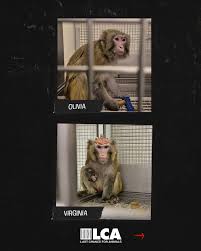
Horrifying undercover footage of the way monkeys are treated in a research facility at York University in Ontario has prompted the Animal Alliance of Canada to urge the Ontario Government to prohibit invasive research on non-human primates. Our gratitude to both Animal Alliance for initiating this action and to Last Chance for Animals for their investigation. Please help!The information below comes from Animal Alliance’s action alert:
Video footage recorded inside a York University research facility by a whistleblower working with a U.S.-based group, Last Chance for Animals, reveals disturbing conditions and ethically questionable research practices. The research involves at least nine non human primates, six of whom have been confined at the facility in Ontario for up to 17 years.
In light of what was uncovered, we are urging the Ontario Government to add non-human primates to the forthcoming updated regulations under the Animals for Research Act, so that the new protections from “invasive medical research” currently in place for dogs and cats are expressly extended to non‑human primates.
At York University, monkeys reportedly are subjected to neurological experiments that include:
Craniotomies and brain implants
Repeated invasive surgical interventions
Use of outdated eye-coil technologies requiring surgical implantation
Severe water deprivation
Like dogs and cats, non-human primates are highly sentient, intelligent, and socially complex beings who experience pain, fear, and psychological distress. The harmful research procedures currently conducted on primates in Ontario at York University raise the same ethical concerns that prompted the Ontario Government’s commitment to protect dogs and cats.
Share this item with the buttons below :
Helping Cattle in Canada: Until the World is Vegan
The Vancouver Humane Society is asking for respectful public input on the new draft code on the care and handling of cattle raised for beef in Canada. These gentle beings can suffer pain, fear, loss and indignity throughout their lives. Even their ultimate slaughter is unimaginably cruel. Please take time to comment before June 12th. They can cry out in despair, but they cannot speak for themselves.
The U.S., U.K., and EU all have plans to phase out animal testing.
Charu Chandrasekera distinctly remembers the moment she realized she needed a career change.
A biomedical researcher, she had been using mice to study heart failure. But everything changed when her father needed a quadruple bypass.
“I looked at him, and all the other people in that ward, and I asked myself, ‘Is the work that I’m doing … ever going to help patients like these?’ And the answer was a resounding no.”
That’s because the information learned using animal testing often doesn’t translate into success in humans. Ninety per cent of drugs tested as safe and effective in animals end up failing in human trials, according to several studies.
She pivoted to developing alternatives to animal testing, founding the Canadian Centre for Alternatives to Animal Methods at Ontario’s University of Windsor in 2017. She helped develop technologies like 3D bioprinted tissues using human cells, to monitor health changes in a petri dish instead of an animal.
But these days, her 3D bioprinter sits in a storage unit. She was forced to close her lab in 2024 due to a lack of funding.
“The centre’s work changed the animal testing conversation in our country. And then it disappeared,” she said. “And only because, unlike in other comparable countries, our government didn’t see it as a priority to fund it.”
To read more & listen to the Quirks and Quarks documentary on animal testing:click here.
Want to take action?
Write to your local MP asking that they bring in funding for the Canadian Centre for Alternatives to Animal Methods so that it can re-open. You can look up your MP at this site: https://www.ourcommons.ca/members/en.
You can also write to The Honourable Marjorie Michel, Minister of Health at:
Canada: End the Use of Live Animals in Trauma Training of Our Armed Forces
Caring advocate Sue-Anne Atkins from Cornwall, Ontario has initiated an urgent petition to Parliament calling for an end to the use of live animals, including piglets, in Canadian Forces medical and trauma training.. For years now, organizations such as Animal Alliance, the Animal Protection Party of Canada, Lifeforce and others have been asking MP’s, the Minister of Defence and the Prime Minister to transition our military to modern, non-animal simulation technologies. Please sign and share this petition, and call on Canada to join the over 70% of NATO member nations that do not inflict horrific injuries on sentient beings in training their armed forces
Share this item with the buttons below :
Urgent : Immediate Action Needed for Horses and Goats
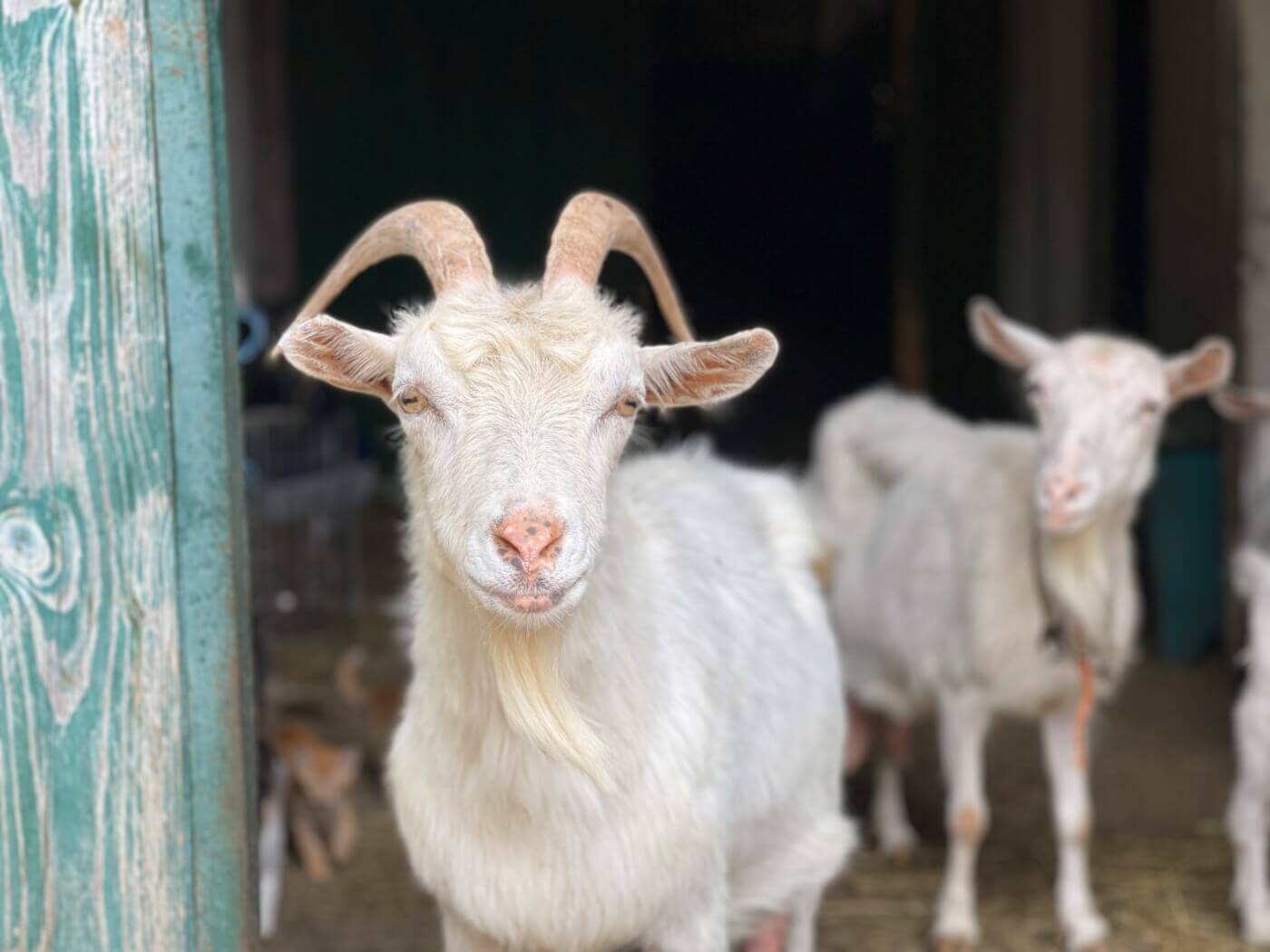
Eight healthy horses and 60 goats are reportedly slated to be killed after pointless practice surgeries at the Washington State University College of Veterinary Medicine. WE HAVE LITTLE TIME to save their lives, and PETA is urging your IMMEDIATE help.
Share this item with the buttons below :
from Vancouver Humane Society: Urgent Action for Horses
Note from ADAV Society:Did you know that Premarin is derived from the urine of pregnant mares? We encourage you to call for a ban on its use and its inherent misuse of horses, and to allow only synthetic and plant-derived alternatives. For the horses, and for womens’ health: Premarin contains estrogens such as equilin that are not naturally found in the human body, unlike biosimilar alternatives.
PETA has important background on its site, revealing that 19 ranches in remote areas of Canada house approximately 1,300 pregnant mares who produce urine for Premarin and Prempro.1,2 For most of their 11-month pregnancies, these horses are confined to stalls so small that they cannot turn around or take more than a single step in any direction. The animals must wear rubber urine-collection bags at all times, which causes chafing and lesions, and their drinking water is limited so that their urine will yield more concentrated estrogen.3 Once the foals are born, the horses are impregnated again, and this cycle continues for about 12 years.4 PMU ranchers are expected to follow the “Recommended Code of Practice for the Care and Handling of Horses in PMU Operations,” but beyond the call for an “inspection program,” adherence to these guidelines is not tracked nor enforced.5
Some of the thousands of foals born on PMU farms each year are used to replace their exhausted mothers. Some are offered for adoption, but the remaining foals—along with worn-out mares—are sold at auction, where most are purchased by buyers for slaughterhouses.6Risks Outweigh Any Benefits In 2002, the Women’s Health Initiative (WHI), a study of more than 16,000 women using Prempro, was abruptly halted by the federal government after it concluded that HRT raises a woman’s risk of having a stroke by 41 percent, her risk of suffering a heart attack by 29 percent, and her risk of developing breast cancer by 26 percent.7 A follow-up study of the women a decade later found that, in addition to an increase in breast cancer rates, the cancer tended to be advanced and cause death.8 Further studies indicated that the type of HRT and dosage, the individual’s age and the length of treatment were all determining factors in the risk of developing breast cancer.9
The WHI also found that Prempro has no meaningful effects on women’s physical or emotional health, pain levels, memory, sleeping patterns, or energy levels. The researchers concluded that Prempro is effective for short-term relief of hot flashes but nothing else. Many women find that they can control hot flashes and other menopausal symptoms by making easy lifestyle changes—like eating a low-fat vegetarian diet and getting regular exercise—rather than contributing to animal suffering. Dr. Jennifer Hays from the Baylor College of Medicine commented, “The average woman will not experience an improvement in her quality of life by taking this pill.”10
What You Can Do If your doctor prescribes HRT, discuss your options and ask for one of the many humane alternatives to Premarin. According to Katherine Swing, a board certified Obstetrician and Gynecologist and Diplomate of the American Board of Obesity Medicine, “(T)here is ample literature to support the safety, efficacy, and better side effect profiles of bio-identical hormones, such as estradiol, progesterone, and testosterone, over synthetic hormones, such as Premarin and Prempro.”11 Plant-based over-the-counter remedies are also available.