State of the Art Technologies Eliminate Use Of Animals in Scientific Research
Across the globe, 21st Century science is taking hold with advanced modelling techniques replacing the use of animals in science. What are some of these sophisticated alternatives?
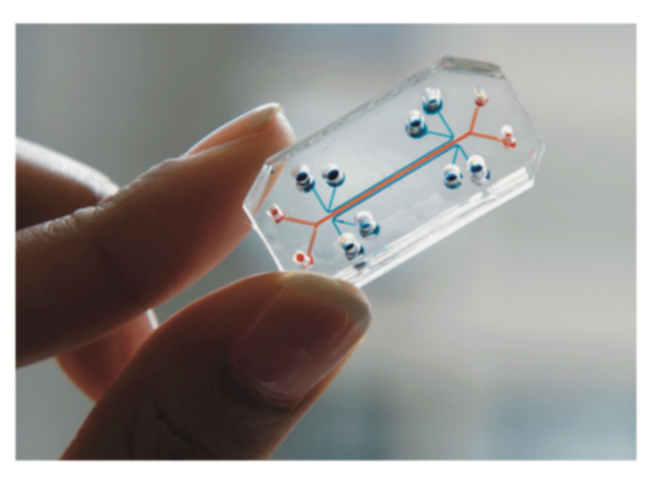
Organs-on-chips – these are innovative devices that are used instead of animals to study biological and disease processes, as well as drug metabolism. For example, heart-on-a-chip is a brilliant proven microfluidic device that is helping researchers understand heart issues and develop new treatments for heart failure.
Organoids – tiny, 3D versions of an organ that mimic the key functional, structural, and biological aspects of the human organ being studied and provide a more realistic way to test new therapies. They offer a more accurate, human-based system than traditional animal models.
Human-derived cell cultures have been central to key developments in areas such as cancers, sepsis, kidney disease and AIDS, and are routinely used in chemical safety testing, vaccine production and drug development.
Human tissues – both healthy and diseased tissues donated from human volunteers can provide a more relevant way of studying human biology and disease than animal testing.
Computer models – of the heart, lungs, kidneys, skin, digestive, and musculoskeletal systems exist and can be used to conduct virtual experiments based on existing information and mathematical data.
Advanced imaging techniques – imaging machines that can ‘see’ inside the body can be used to monitor the progression and treatment of disease. They can help researchers understand causation by comparison with healthy volunteers.
Microdosing – can be used in volunteers to measure how very small doses of potential new drugs behave in the human body. These microdoses are labelled, injected into human volunteers and measured (usually in blood samples) using sensitive measuring devices. This technique sets the stage for a new era of safer, personalized medicine.
Lack of Government Support
By 2040, it is predicted that Australia’s leadership in these new technologies (Non-Animal Methods, or NAMs) will generate more than $1.5 billion and create 4,900 high-tech jobs. By contrast, Canada’s single facility focused on the development and validation of alternatives was forced to close its doors due to a complete lack of government support.
In the US , federal agencies are realizing the need for change. In this past year, both the FDA and the NIH have made groundbreaking announcements that they plan to reduce and replace animals in drug testing and disease research. The FDA stated that “there is growing recognition that animals do not provide adequate models of human health and disease.” The National Institutes of Health Director declared that “For decades, our biomedical research system has relied heavily on animal models. With this initiative, the NIH is ushering in a new era of innovation.” The mandate that new drugs must be tested on varying species of non-human animals has ended.
Reports from the EU disclose that it is accelerating the transition to animal-free, human-relevant and humane science. The UK has gone a step further: the government has set clear replacement goals with its Replacing Animals in Science roadmap. It plans to strengthen infrastructure and oversight by establishing a national validation centre for alternative methods, launching public progress tracking tools, and prioritising funding for non-animal research.
Not so in Canada. It is estimated that more animals are used in experimentation here each year than in the entire EU. Ideally, Canada’s governments and research institutions would:
1. Develop a roadmap for validating and implementing non-animal methods, setting targets to reduce animal use in research, teaching and regulatory testing (50% by 2030, full replacement where feasible by 2035);
2. Allocate sustainable funding to lead the transition to animal-free research, teaching and testing;
3. Prioritize NAMs, with replacement methods as the default in research, testing and teaching; and
4. Amend regulations to recognize NAMs as the standard, restricting animal use whenever alternatives exist.